A1C Levels: Meaning, Ranges, and eAG Guide



Key Takeaways
- A1C meaning: A1C measures average glucose over two to three months by checking the percentage of glycated hemoglobin in the blood.
- A1C range: Normal A1C levels are below 5.7%, while a range of 5.7% to 6.4% indicates prediabetes and 6.5% or higher indicates diabetes.
- A1C to eAG: Your A1C percentage can be converted into estimated Average Glucose (eAG), which expresses long-term trends in standard mg/dL units.
- A1C meaning: A1C measures average glucose over two to three months by checking the percentage of glycated hemoglobin in the blood.
- A1C range: Normal A1C levels are below 5.7%, while a range of 5.7% to 6.4% indicates prediabetes and 6.5% or higher indicates diabetes.
- A1C to eAG: Your A1C percentage can be converted into estimated Average Glucose (eAG), which expresses long-term trends in standard mg/dL units.
The A1C test measures your average glucose level over the past two to three months by checking the percentage of red blood cells coated with glucose. This result helps screen for prediabetes and diabetes, but it doesn't show daily fluctuations like spikes and dips.
Highlights:
- An A1C of 5.6% or lower is considered normal, 5.7% to 6.4% suggests prediabetes, and 6.5% or higher may indicate diabetes.
- Your A1C percentage can be converted to an estimated Average Glucose (eAG), a number in mg/dL that is similar to daily glucose meter readings.
- A1C can be misleading due to factors like anemia, kidney or liver disease, certain medications, and even pregnancy.
- Unlike an A1C average, Time in Range (TIR) from a CGM shows the percentage of time you spend within your target glucose zone.
- The Nutrisense program and its biosensors are currently available for shipping only within the United States.
What is A1C?
Glycated hemoglobin, or A1C, is a medical blood test result used to gauge how much glucose has been in a person’s blood over a three-month period. It’s usually preferred over a simple fasting glucose level since it reflects an average of the ups and downs of glucose levels over a longer time horizon.
How is it Measured?
Hemoglobin is a molecule found within red blood cells that helps carry oxygen all around our body for cells to use. One unique property of this molecule is that it can spontaneously bind to glucose, fructose, and galactose. Since red blood cells tend to live for around 120 days, we can measure the percentage of glucose that’s been bound to hemoglobin, or glycated hemoglobin. You can get this lab tested at any doctor’s office and at many larger pharmacy chains.
A1C Levels
The best practice for interpreting your A1C result is always to discuss it with your primary care provider. This will provide the most context for your specific situation and goals. Here you can find what are generally considered normal levels of A1C and levels that you may want to take a closer look at.
Normal Range
The normal range of A1C should be below 5.7%.
Prediabetic Range
If your A1C levels are above 5.7%, then they’re above what’s considered normal. However, if they’re below 6.4%, this would still be regarded as a prediabetic range and not diabetes.
Diabetes Range
Lastly, if your A1C levels are above 6.4%, this would be considered a marker of diabetes. Persistently high glucose levels have many adverse health effects. In this case, you should inform your primary care provider of this result as soon as possible.
A1C to eAG Unit Guide
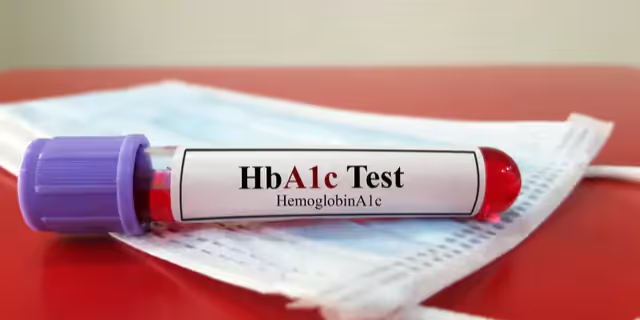
eAG estimated average glucose translates your A1C percent into the same units you see day to day, mg/dL or mmol/L. It reflects a 24/7 average over about 3 months and includes nights, meals, workouts, and stress.
Because eAG is an average, your daily swings still matter. Two people with the same A1C can have very different patterns across the day.
- A1C 5.7 percent is roughly eAG 117 mg/dL 6.5 mmol/L
- A1C 6.4 percent is roughly eAG 137 mg/dL 7.6 mmol/L
- A1C 7.0 percent is roughly eAG 154 mg/dL 8.6 mmol/L
- Quick unit tip: to convert mg/dL to mmol/L, divide by 18. To convert mmol/L to mg/dL, multiply by 18.
When Should You Get an A1C Test?
Historically, this blood test has only been performed in the context of diabetes screening and workup. Today, you can always order an at-home test if you’re concerned and want an immediate result from a private laboratory. Alternatively, you can use an at-home test if you’ve been diagnosed with pre-diabetes and want to keep a close eye on your glucose trends.
Who May Benefit
If you have symptoms that suggest you may be at risk of pre-diabetes, you can also use such a test to screen yourself, preferably in consultation with your primary care provider. People with other autoimmune diseases may be at increased risk of type 1 diabetes mellitus, for example, and often undergo an A1C test at least once annually.
Daily Trends Option
If you want to see a more detailed picture of your daily glucose trends, you can also use our guide comparing glucose monitors to find the best one that will work well for you.
What are the Limits of A1C Testing?
If your glucose levels are fluctuating dramatically, in the sense that they have many spikes and lows over a 24-hour period, an average glucose level (what A1c measures) wouldn’t be able to pick up the highs and lows.
When Your Lab Report Doesn't Tell the Whole Story
You get the results from your latest physical, and your A1C is 5.8%. The number is frustrating because you’ve been so diligent with your diet and workouts. That single percentage is a three-month average, but it doesn’t show what happens between doctor visits.
It can’t tell you if that smoothie you have for breakfast is causing a sharp glucose spike, or how your body responds to your evening walk. You’re left wondering what daily choices are impacting that long-term number.
Spikes and Lows
One individual could have the same A1C value as another, but one person could be having glucose spikes to 140 while another is having spikes to 200.
Hemoglobin Changes
Also, because the test relies on the percentage of hemoglobin that has been glycated, the presumption is that hemoglobin is held constant, and the glucose in the blood is what will push the value higher or lower. But in some cases, such as people with chronic anemia, these results can be misleading, as they have less hemoglobin than the average person.
Even with the same amount of glucose in the blood, their A1C values would be elevated and could appear to indicate pre-diabetes when they are otherwise metabolically healthy. Similarly, someone with an intravascular hemolytic condition would have red blood cells broken down within the blood, causing further inaccuracy. Other examples that could cause your A1C level to be falsely high or low include recent blood loss, smoking, or Vitamin B12 deficiency.
What are the Signs Your A1C is High?
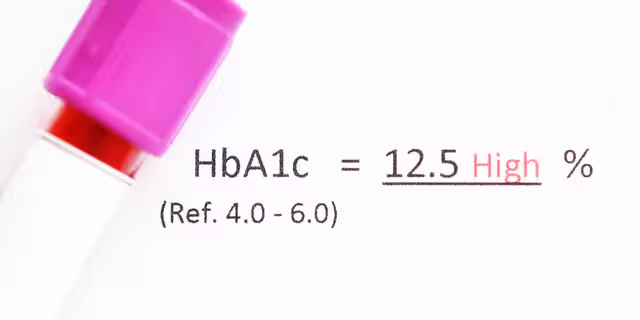
It can be challenging to see if you have pre-diabetes since the symptoms are not specific and often confused with other common diseases or simply having a bad day. Some diseases manifest across multiple organ systems, like Cushing Syndrome, Polycystic Ovary Disease, or Hypothyroidism. In all these cases, as well as in Type 2 Diabetes Mellitus, you can have a finding called acanthosis nigricans, or the presence of darkened skin along the skin folds in the armpit, neck, or groin.
Varied presentations
Of course, not every presentation is the same. This can also be caused by extreme obesity, and some people also have skin tags growing along the patches of skin folds affected.
How to Lower Your A1C Levels
Keep an eye out for an upcoming comprehensive post on ways to control long-term glucose levels, but for the present moment, have a look at our short recommendations.
Exercise Regularly
In addition to improving insulin sensitivity, exercise can improve the metabolic handling of sugars in general. You can read more about this here.
Get Enough Sleep
Although this is an excellent wellness practice in general, it is imperative to get enough sleep if you are trying to keep glucose levels within a healthy range.
Reduce Stress
Acute stress is a normal part of life and some stress can actually be beneficial, but chronic stress is quite harmful to controlling glucose levels.
Find the right Nutrisense programto turn insight into progress.
Frequently Asked Questions
What does A1C measure?
A1C measures your average glucose level over the past two to three months. It specifically checks the percentage of hemoglobin in your red blood cells that has glucose attached to it. While a daily glucose reading shows a single point in time, A1C provides a long-term view of your metabolic health.
What does A1C stand for?
A1C stands for HbA1c, which is the medical term for glycated hemoglobin. Hemoglobin is the protein in your red blood cells responsible for carrying oxygen. When glucose enters your bloodstream, it naturally sticks to these proteins; the A1C test measures the total percentage of these "sugar-coated" cells over their 120-day lifespan.
What are normal A1C levels?
Normal A1C levels for a healthy adult are typically below 5.7%. A result between 5.7% and 6.4% is classified as the prediabetic range, while 6.5% or higher indicates diabetes. Tracking your individual glucose response with a biosensor can help you understand the daily habits that influence these long-term lab results.
Go Beyond Glucose Data with Nutrisense
Your glucose can significantly impact how your body feels and functions. That’s why stable levels are an important factor in supporting overall wellbeing. But viewing glucose isn't enough. Nutrisense, you’ll be able to learn how to use your body's data to make informed lifestyle choices that support healthy living.
One-to-one coaching
Sign up to access insurance-covered video calls to work with a glucose expert: a personal registered dietitian or certified nutritionist who will help tailor your lifestyle and diet to your goals.
Monitor and measure what matters
With the Nutrisense CGM Program, you can monitor your glucose with health tech like glucose biosensors and continuous glucose monitor (CGM)s, and analyze the trends over time with the Nutrisense App. This will help you make the most informed choices about the foods you consume and their impact on your health.
Find your best fit
Ready to take the first step? Start with our quiz to find the right Nutrisense program to help you take control.
How Nutrisense Supports A1C Goals
Your glucose can significantly impact how your body feels and functions. That’s why stable levels are an important factor in supporting overall wellbeing. But viewing glucose isn't enough. With Nutrisense, you’ll be able to learn how to use your body's data to make informed lifestyle choices that support healthy living.
Dietitian Support
Sign up to access insurance-covered video calls with a glucose expert: a personal registered dietitian or certified nutritionist who will help tailor your lifestyle and diet to your goals.
Glucose Biosensors
With the Nutrisense Program, you can monitor your glucose with health tech like glucose biosensors and continuous glucose monitors (CGMs), and analyze the trends over time with the Nutrisense App. This will help you make the most informed choices about the foods you consume and their impact on your health.
Get Started
Ready to take the first step? Start with our quiz to find the right Nutrisense program to help you take control.

Kara Collier is a registered dietitian nutritionist and certified nutrition support clinician who is passionate about reshaping how we approach prevention, behavior change, and metabolic health. A Forbes 30 Under 30 honoree, she’s helped over 150,000 people improve their metabolic health using tools like continuous glucose monitors and behavior-focused nutrition strategies. Kara has been featured by Forbes, UC Berkeley, and HLTH, and has appeared on top podcasts like Mind Pump and The Genius Life.