The Paleo Diet and Blood Glucose: Managing Your Sugar Levels


Key Takeaways
- Paleo diet and glucose: The paleo diet prioritizes whole, unprocessed foods like lean meats and vegetables to stabilize glucose levels and reduce metabolic variability.
- Paleo carbohydrates: Carbohydrates in a paleo diet come from fiber-rich fruits and vegetables rather than refined grains, which can help prevent sharp post-meal glucose spikes.
- Diabetes and Paleo: Research indicates that the paleo diet may support insulin sensitivity in those with prediabetes or type 2 diabetes by removing processed starches and added sugars.
- Paleo diet and glucose: The paleo diet prioritizes whole, unprocessed foods like lean meats and vegetables to stabilize glucose levels and reduce metabolic variability.
- Paleo carbohydrates: Carbohydrates in a paleo diet come from fiber-rich fruits and vegetables rather than refined grains, which can help prevent sharp post-meal glucose spikes.
- Diabetes and Paleo: Research indicates that the paleo diet may support insulin sensitivity in those with prediabetes or type 2 diabetes by removing processed starches and added sugars.
Sometimes it feels like most of our attention goes to refined sugar, starches and how to avoid them altogether. It’s also important - we should keep in mind - that much of the food we will eat on a typical day will inevitably have some starch and sugar in it. But what do we mean by starch and sugar? In the broadest possible sense, we mean carbohydrates - and fortunately for us, not all carbohydrates are created equal.
Although there are many ways to divide carbohydrates, one of the most useful for our purposes is simple and complex. Simple carbohydrates are easy to digest and enter the blood relatively quickly, so they can raise your blood glucose levels almost immediately.
Complex carbohydrates need some more digestion to make their way into your blood, so they’re less likely to cause the harmful long-term health effects associated with sugar spikes. The paleo diet is much broader than just recommending complex carbohydrates over simple ones, which is broadly accepted dietary advice anyway.
What is the Paleo Diet, Really?

The premise of the paleo diet is that the body can handle a mix of meats, fruits and vegetables, eggs, fish, and complex carbohydrates better than processed meats, refined fats, grains and simple carbohydrates because it evolved to eat the first category as hunter-gatherers. After all, without refined sugar and heavily processed foods like doughnuts, all our ancestors could eat was foods that were either eaten whole or prepared whole, like a roasted chicken or a whole carrot.
As a tool to identify whole foods, the paleo diet is a convenient way to manage blood glucose levels, but the paleo diet is not exactly perfect. We certainly wouldn’t want to recommend eating only meat from animals you hunted - so be sure not to take things too seriously!
Both rice and potatoes are better forms of starch than refined sugar, in terms of their effects on blood glucose levels. Similarly, a slab of steak cooked over an open fire is a better choice than a processed hamburger patty packed with salt and sugar.
Digging into the Paleo Diet
Pardon the archaeology pun - we promise it’s going somewhere. The paleo in paleo diet comes from the term paleolithic, which refers to the period in which humans learned to use stone tools. This means that it relates strictly to Homo habilis, the primate that first used tools, and not Homo sapiens, which developed later and of which all modern-day humans are members.
More saliently for our purposes, the paleolithic period refers to a time before agriculture, including the cultivation of low-sugar vegetables and lean domesticated meats. If we take this to its logical conclusion, in the strictest possible sense, a fully paleo diet would mean excluding cultivated grains like buckwheat and quinoa, as well as legumes like beans and peas, which became widely cultivated long after the dawn of agriculture.
The strictest regimens would even exclude sweet potatoes and vinegar, which can be helpful substitutes for far worse food choices and help control blood glucose levels. We think it’s best not to let the perfect be the enemy of the good!
As we’ve recommended some of the above foods, like buckwheat or vinegar, as a salad dressing instead of ranch, it’s tough to recommend a strict paleo diet without any reservations. One of our all-time favorites is unsweetened Greek yogurt, a high protein and low sugar dairy product that is incredibly filling and versatile.
The only thing paleo about Greek yogurt with flax seeds would be the flax seeds! Similarly, a healthy and carbohydrate light bowl of Poke would not be considered paleo, depending on the small amounts of low-sugar dressings.
Types of Paleo Foods

The classic paleo diet may be a bit too strict for some individuals to follow long-term. Still, the basic principles behind it are a reasonable guidepost for a diet to control blood glucose levels.
What we can easily recommend are many individual foods that are part of the classic paleo diet. Just so long as they’re eaten as part of a balanced and low-sugar diet - which, fortunately, many of them already are! Our basic idea here is that painting with a broad brush is not a recipe for personal health - what may work for one person’s body may not work for another’s.
Some of our recommendations to include from the classic paleo diet:
- Roasted game like deer, elk, antelope, rabbit, wild duck
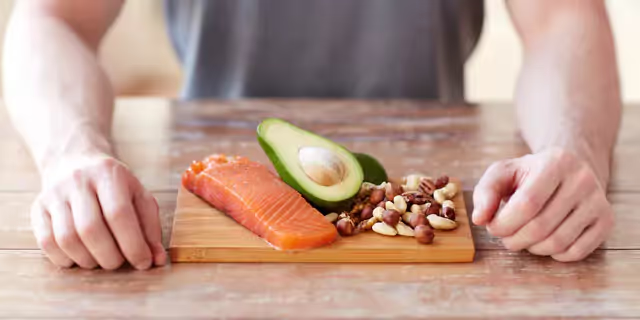
- Grilled wild-caught fish like salmon, haddock, tuna, rockfish, mahi-mahi
- Pasture-raised eggs
- Fresh whole fruits like grapefruit, lemon, avocado, blueberries, coconut
- Fresh whole vegetables like carrots, celery, onions, leek, endives
It can be a great goal to aim for the “80/20” rule here - aim for 80% of your diet being from a classic paleo template, and allowing 20% of non-Paleo foods that you enjoy. In this sense, we think “as close to nature as possible” is generally excellent advice.
Find the right Nutrisense programto turn insight into progress.
Frequently Asked Questions
Is the paleo diet good for diabetics?
It can be, as the paleo diet eliminates processed sugars and refined grains that often cause significant glucose spikes. This eating pattern focuses on nutrient-dense, high-fiber foods that may improve insulin sensitivity and overall glycemic control. Since everyone’s metabolism is unique, working with a Registered Dietitian can help you tailor paleo principles to your specific health goals.
What is the difference between a sugar-free diet and paleo?
The main difference is that a sugar-free diet focuses solely on eliminating sugar, while the paleo diet excludes all processed foods, grains, and legumes. Paleo allows natural sugars from fruits and honey, whereas a strict sugar-free diet may permit processed grains but no added sweeteners. Using a glucose biosensor can reveal how each approach impacts your unique metabolic health and energy levels.
What are the best paleo-friendly carbohydrates?
The best paleo-friendly carbohydrates include non-starchy vegetables, berries, and certain tubers like sweet potatoes or carrots. These options provide essential fiber and micronutrients without the rapid glucose impact associated with refined starches or flours. Choosing the right carbohydrates depends on your personal metabolic data and how your body responds to different food pairings.
Go Beyond Glucose Data with Nutrisense
Your glucose can significantly impact how your body feels and functions. That’s why stable levels are an important factor in supporting overall wellbeing. But viewing glucose isn't enough. Nutrisense, you’ll be able to learn how to use your body's data to make informed lifestyle choices that support healthy living.
One-to-one coaching
Sign up to access insurance-covered video calls to work with a glucose expert: a personal registered dietitian or certified nutritionist who will help tailor your lifestyle and diet to your goals.
Monitor and measure what matters
With the Nutrisense CGM Program, you can monitor your glucose with health tech like glucose biosensors and continuous glucose monitor (CGM)s, and analyze the trends over time with the Nutrisense App. This will help you make the most informed choices about the foods you consume and their impact on your health.
Find your best fit
Ready to take the first step? Start with our quiz to find the right Nutrisense program to help you take control.

Kara Collier is a registered dietitian nutritionist and certified nutrition support clinician who is passionate about reshaping how we approach prevention, behavior change, and metabolic health. A Forbes 30 Under 30 honoree, she’s helped over 150,000 people improve their metabolic health using tools like continuous glucose monitors and behavior-focused nutrition strategies. Kara has been featured by Forbes, UC Berkeley, and HLTH, and has appeared on top podcasts like Mind Pump and The Genius Life.